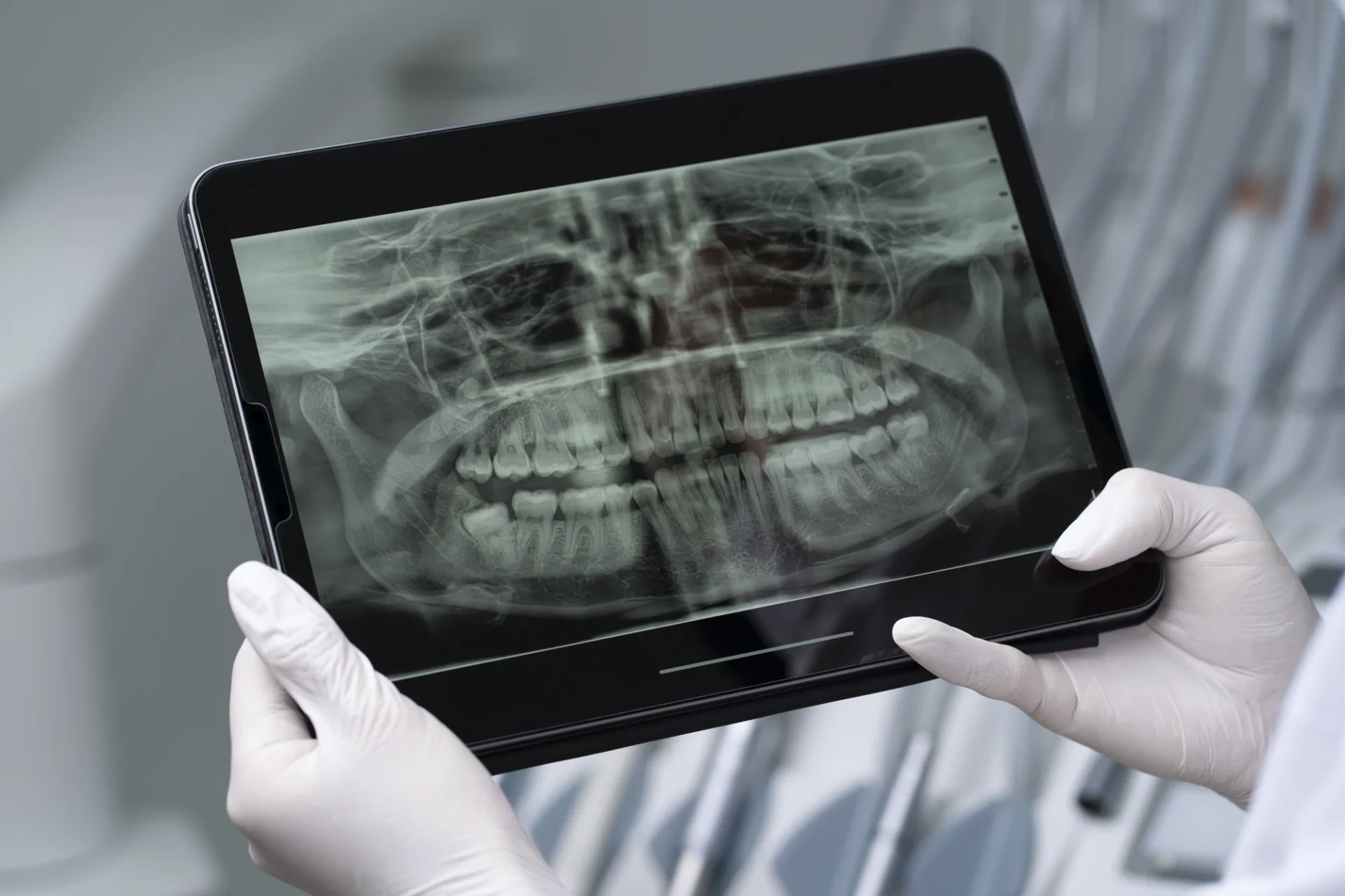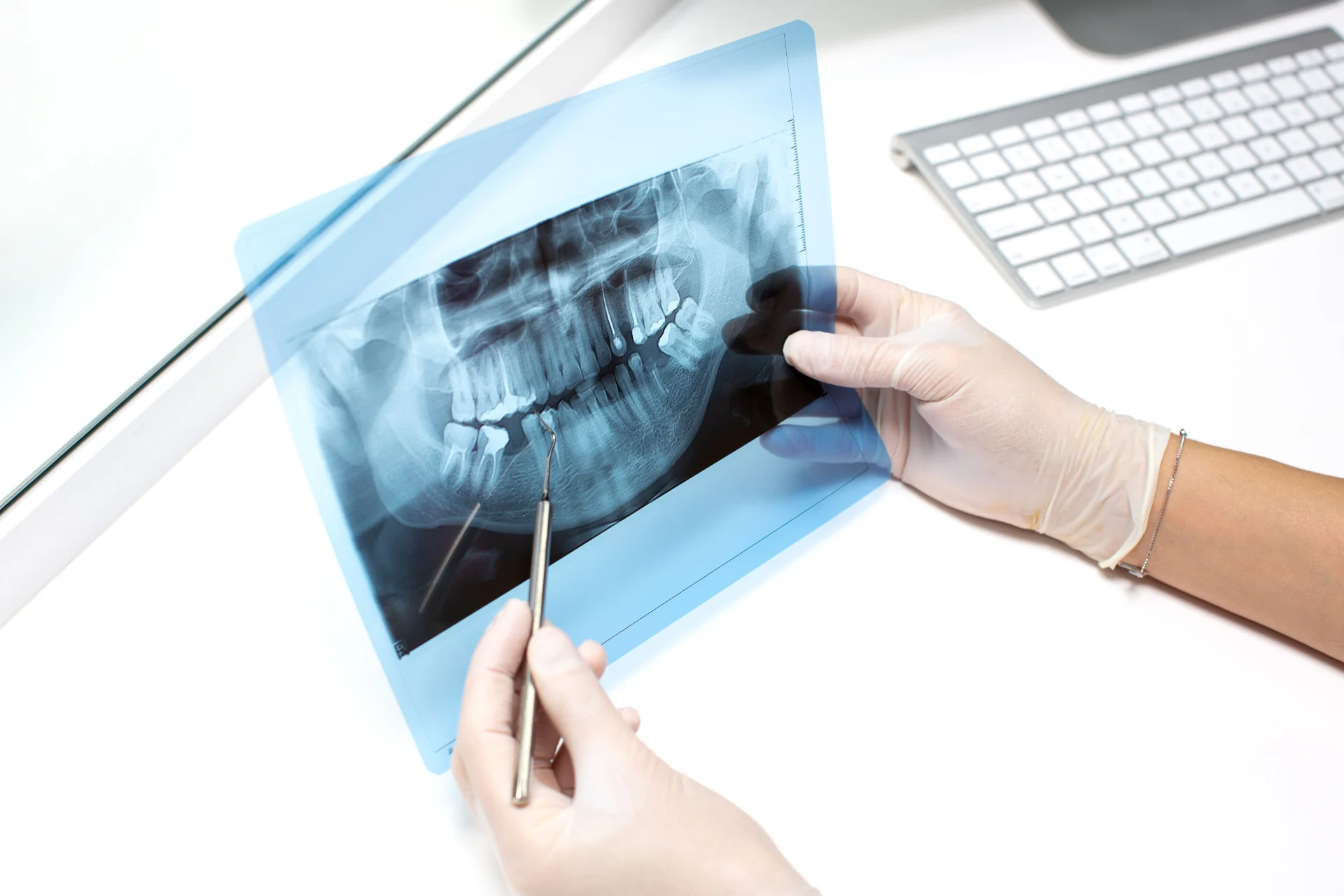
A healthy smile starts with understanding what is happening beneath the surface, and that is exactly what a panoramic X-ray is designed to show. Instead of looking at one or two teeth at a time, this type of imaging captures your entire jaw, teeth, and surrounding bone structure in a single, wide image.
It is one of the most commonly used diagnostic tools in modern dentistry, and for good reason. A panoramic X-ray helps dentists spot problems that are not visible during a regular checkup, from impacted teeth to bone loss and jaw disorders, all without needing multiple separate scans.
This article walks through what a panoramic X-ray actually is, how the process works, and when your dentist might recommend one. As always, this is general information to help you understand the topic better, not a substitute for an actual dental evaluation.
Read Also: Cephalometric X-Ray: Purpose, Procedure, and Uses
What is a Panoramic X-Ray?
Before getting into how it works, it helps to understand what makes this type of X-ray different from the ones most people are already familiar with.
A panoramic X-ray, sometimes called an OPG (orthopantomogram) or pantomogram, is a single flat image that shows the upper and lower jaw, all the teeth, and nearby structures like the sinuses and jaw joints. This is different from a traditional dental X-ray, which typically focuses on just a few teeth at a time using a small sensor placed inside the mouth.
Instead of a sensor inside the mouth, a panoramic X-ray uses a machine that rotates around the outside of the head, capturing the entire mouth in one continuous sweep. So yes, an OPG is essentially the same thing as a panoramic X-ray, just referred to by a different name depending on the country or clinic.
This type of imaging is commonly used for:
- Planning dental implants or orthodontic treatment
- Checking the position of wisdom teeth before extraction
- Detecting cysts, tumors, or bone abnormalities
- Getting a general overview of oral health during a comprehensive checkup
How Does the Panoramic X-Ray Process Work?
Knowing what to expect can make the process feel a lot less intimidating, especially if this is your first time getting one.
The procedure itself is quick and does not require any special preparation. Here is generally what happens during the session:
- You will be asked to remove any metal objects, such as earrings, glasses, or jewelry, since metal can interfere with the image.
- You will stand or sit in front of the machine and bite down gently on a small positioning guide to keep your head still.
- The machine rotates slowly around your head, taking the image in one continuous motion.
- The entire scan typically takes less than 30 seconds, though the full appointment including positioning may take a few minutes.
There is no discomfort involved. You may feel the machine moving around you, but there is no pinching, pressure, or pain at any point.
On the safety side, panoramic X-rays are considered a low radiation dose imaging technique. Comparative studies measuring radiation exposure across different dental imaging methods have found that a panoramic radiograph typically delivers a relatively modest effective dose compared to more detailed scans like CT imaging, even though the exact dose can vary depending on the equipment used.
According to information published by the Health Physics Society, panoramic radiography actually requires one of the lowest radiation doses among the X-ray techniques used to image the teeth and jaw, which is part of why it has become such a routine diagnostic tool.
Advantages of Panoramic X-Ray
Beyond the process itself, there are several reasons why dentists rely on this imaging method so often.
- Complete view in one image: Instead of taking several individual X-rays, a single scan captures the entire mouth, saving time and reducing the number of exposures needed.
- Early detection: Because it shows a wider area, a panoramic X-ray can catch issues that would otherwise go unnoticed until they become more serious, such as early bone loss or a developing cyst.
- Quick and comfortable: The process is painless and takes only a few minutes from start to finish, making it suitable even for patients who feel anxious about dental visits.
- Works for all ages: Panoramic X-rays are commonly used for both children, particularly to monitor tooth development, and adults preparing for more advanced treatments.
When Do You Need a Panoramic X-Ray?
Not every dental visit requires this type of imaging, but there are specific situations where it becomes an important part of the process.
Your dentist may recommend a panoramic X-ray if you are:
- Preparing for a dental implant or orthodontic treatment, since it shows the bone structure and available space needed for planning
- Experiencing symptoms that suggest a jaw disorder, cyst, or impacted tooth
- Undergoing a comprehensive oral health checkup where a full overview is helpful
- Due for a periodic evaluation based on your age, dental history, or ongoing treatment
So, do you really need a panoramic X-ray every visit? Not necessarily. The frequency depends on your individual dental condition, age, and treatment history, which is why your dentist will only recommend one when it is clinically useful rather than as a routine formality.
Professional Recommendations and Care at BIA Dental Center

Understanding the value of panoramic imaging is one thing, but having access to accurate, well-maintained equipment is what actually makes a difference in your treatment outcome.
BIA Dental Center uses digital panoramic X-ray technology as part of its BIA X-Ray facility, designed to deliver clear results with a low radiation dose. Because everything is integrated in-house, including BIA Lab for any follow-up restorative work, patients do not need to be referred elsewhere just to get a complete diagnostic picture.
Just as important as the imaging itself is how it gets interpreted. A panoramic X-ray is only useful when read correctly by an experienced dentist who can connect what is visible in the image to an actual treatment plan. This is especially relevant for procedures like dental implants, Invisalign, or full mouth rehabilitation, where the accuracy of the imaging directly affects how well the treatment is planned. The overall approach focuses on keeping the process comfortable and safe, while still being thorough enough to catch issues early.
Read Also: Breaking Down Dental Crowns: Benefits, Types, and Procedure
Consultation and Next Steps
If your dentist recommends a panoramic X-ray, it is worth asking a few questions before the appointment, such as why it is needed for your specific situation and what the dentist expects to see from it. This helps you understand the purpose of the scan rather than just going through the motion.
Once the image is taken, your dentist will walk you through the results and explain how they influence your treatment options, whether that means moving forward with an implant, starting orthodontic treatment, or simply confirming that everything looks healthy.
Please keep in mind that this article is meant for general understanding only and is not a replacement for professional dental advice. Any decision about your specific treatment should be made together with a licensed dentist after an in-person evaluation, rather than based on online information alone.
Book a consultation at Bia Dental Center to get a complete diagnostic evaluation for your oral health.