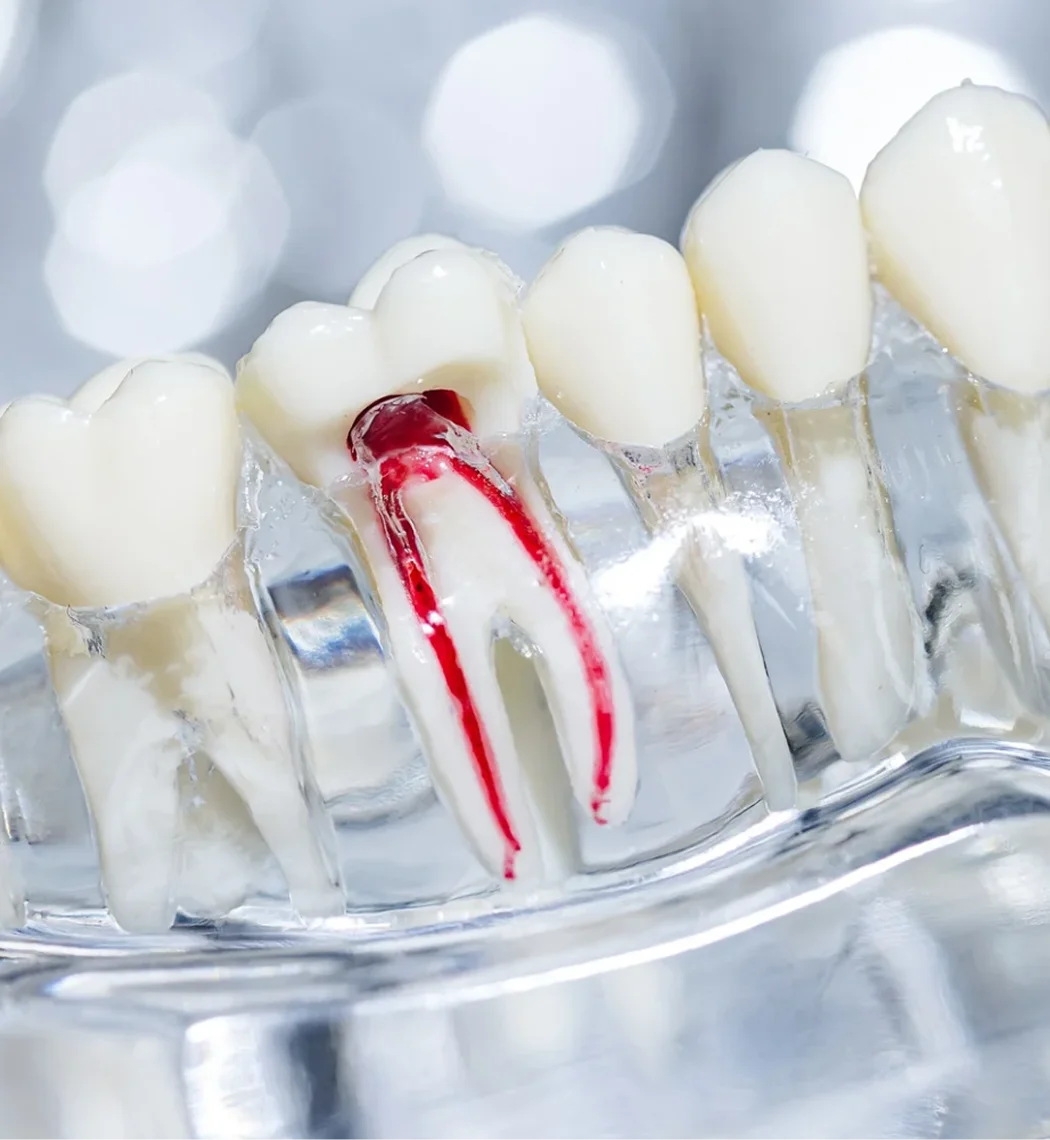
Root Canal Treatment
Root canal treatment, also known as endodontic therapy, is a procedure used to save a tooth that is severely decayed, damaged, or infected. It involves removing the infected or inflamed pulp tissue inside the tooth, thoroughly cleaning and disinfecting the root canals, then filling and sealing them to prevent future infection.
This procedure is typically recommended when the pulp is infected due to deep decay, repeated dental procedures, or trauma. It helps relieve pain and sensitivity, preserves the natural tooth structure, and restores its full function for chewing and speaking. In most cases, a crown will be placed afterward to protect and strengthen the treated tooth.
Who Need This Treatment

Individuals with severe toothache caused by deep decay or infection in the pulp (nerve)

Patients with sensitive, swollen, or abscessed teeth

Teeth that have experienced trauma or cracked enamel reaching the nerve

Those who want to save a natural tooth instead of extracting it

Patients with darkened or discolored teeth due to nerve damage

Ideal for anyone looking to eliminate infection, relieve pain, and restore function without removing the tooth
Aftercare &
Maintenance
- After a root canal treatment, some patients may still experience pain or discomfort, but this is normal. Painkillers may be taken as prescribed to manage the symptoms
- Patients are encouraged to use the treated tooth, but avoid putting excessive pressure on it
- A follow-up dental check-up should be done no later than 6 months after the treatment
- If the tooth has been restored (e.g., with a crown), the restoration should be checked 3–6 months after placement
- A dental X-ray is recommended 3 months after the root canal treatment to assess the healing progress
Treatment Time Frame

1st Visit
- Consultation
- Rontgen
- Treatment planning
- Infected dental root will be cleaned
Note: Some patients may experience pain 1–2 days after the root cleaning, but this is normal. Painkillers are recommended to manage discomfort

2nd Visit (2-3 days later)
- If there is no pain, the root canal will be filled with a substitute material.
- If the tooth structure is still in good condition, it can be filled immediately, and follow-up is advised every 6 months.
- If the tooth structure is compromised, a crown will be prepared.

3rd Visit (1 day later)
- Crown preparation process: the tooth will be pegged, re-walled, and molded
- The mold is sent to the lab for crown fabrication (takes 3–4 days)
- The patient will wear a temporary crown

4th Visit (3-4 days later)
- Permanent crown installation

5th Visit
- Routine crown check-up every 6 months