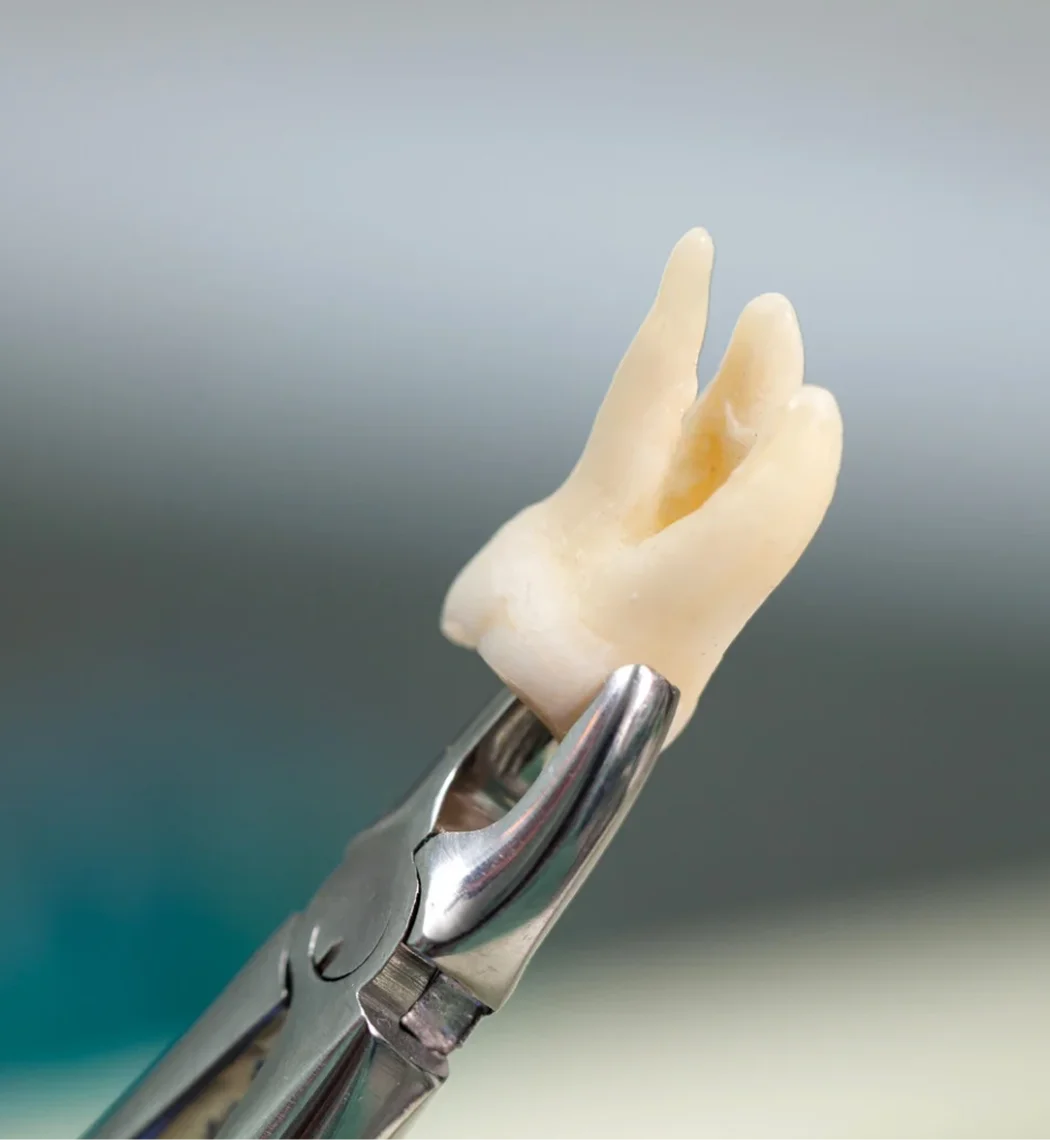
Dental Extraction
Dental extraction is a procedure to remove a tooth that is damaged beyond repair, severely decayed, infected, or causing crowding. This treatment may also be necessary for impacted wisdom teeth or as part of orthodontic preparation.
The procedure is performed under local anesthesia to ensure patient comfort. Depending on the tooth’s condition, the extraction may be simple or surgical. After the tooth is removed, patients will receive instructions for aftercare to support healing and prevent complications such as infection or dry socket.
Dental extraction helps eliminate pain, prevent the spread of infection, and maintain oral health. In some cases, a replacement solution such as a dental implant, bridge, or denture may be recommended after healing.
Who Need This Treatment

Individuals with severely decayed or damaged teeth that cannot be restored

Patients with impacted wisdom teeth causing pain, swelling, or infection

Those with advanced gum disease that has loosened teeth significantly

Patients needing tooth removal for orthodontic purposes (e.g., overcrowding)
Individuals with tooth infection or abscess not responding to root canal treatment

Teeth involved in trauma or fracture beyond repair
Aftercare &
Maintenance
- Minor bleeding after the procedure is normal. Bite on the gauze over the bleeding area for 30 minutes. If the bleeding continues, please contact BIA Dental Center.
- Some swelling may occur after the surgery. You can reduce it by applying an ice pack to the affected area.
- 2–3 days after the extraction, a yellowish layer called fibrin may form on the gum. Do not touch or disturb it, as this is a normal part of the healing process.
- Keep your mouth clean:
- Drink plenty of water
- Avoid hot food and beverages
- Eat soft foods for at least one day after the surgery
- Do not spit or use a straw when drinking
- Take painkillers if you feel uncomfortable
- Take all prescribed medications as directed by your dentist
- If you experience an allergic reaction, contact BIA Dental Center immediately
- Schedule a routine dental check-up every 6 months
Treatment Time Frame
STAGE 1

1st Visit
- Consultation
- Rontgen (if necessary)
- Treatment planning
- Extraction/tooth surgery

2nd Visit (7-10 days later)
- Post extraction check up (if needed)
- Post tooth surgery: stitch removal (if any) & follow up examination