When people hear the word “braces,” many still imagine the traditional metal version. There are now several types of braces available, making orthodontic treatment more personalized than ever before. Today, braces are no longer a one-size-fits-all solution. Therefore, patients can choose based on comfort, appearance, and lifestyle.
Whether you’re a professional, a traveler, or someone who simply values a flawless smile, understanding your options helps you make the right decision.
Read Also: Breaking Down Dental Crowns: Benefits, Types, and Procedure
5 Types of Braces
Orthodontic care has advanced significantly, allowing patients to choose from a wide range of solutions to fit their lifestyle. Below are the five most common and effective types of braces, each with unique benefits, challenges, and suitability.
1. Traditional Metal Braces
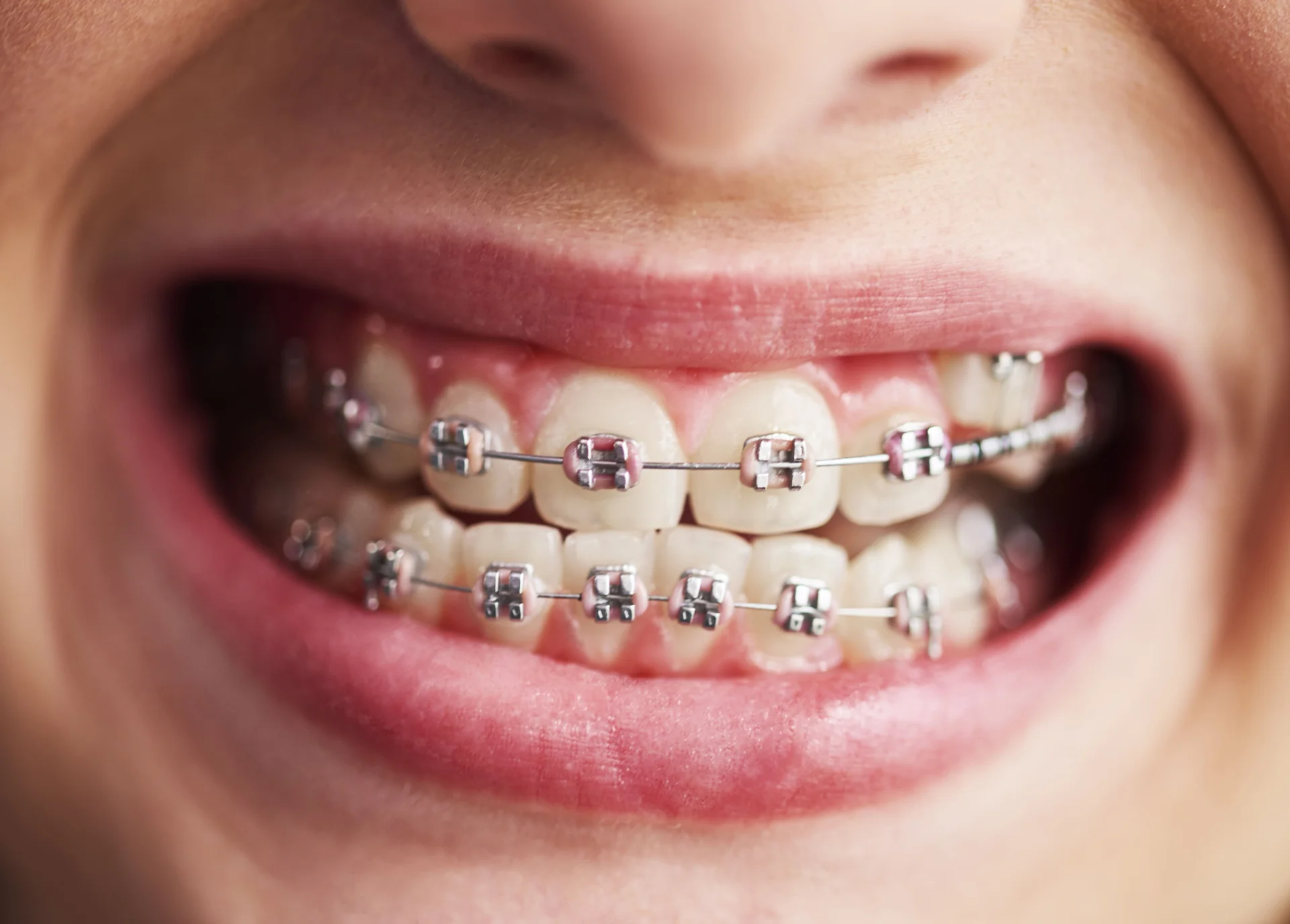
Metal braces are the original and still the most widely used option in orthodontics. They are made of high-quality stainless steel and use brackets, wires, and elastic bands to guide teeth into place.
Since their consistency, metal braces are still used as the benchmark when testing new bracket materials or techniques in many clinical trials.
Pros:
- Very effective for complex alignment and bite issues.
- Typically the most affordable type of braces.
- Often deliver faster results for severe cases.
Cons:
- Highly visible on teeth.
- Possibly cause minor irritation inside the mouth.
- This choice is best for teens and adults who want a reliable, cost-effective solution and feel at ease with a visible treatment option.
2. Ceramic Braces
The second of the diverse types of braces is ceramic braces. These types work like metal braces but use tooth-colored or clear brackets for a more discreet appearance.
Pros:
- Blend naturally with teeth, making them less noticeable.
- Effective for mild to complex orthodontic problems.
- More comfortable on gums and lips than metal brackets.
Cons:
- More fragile and prone to breakage.
- Brackets can stain if not carefully maintained.
- Best for adults and professionals who want an effective yet more aesthetically pleasing option.
A study entitled “A Clinical Comparison of Failure Rates of Metallic and Ceramic Brackets: A Twelve-Month Study“ comparing metal vs ceramic brackets found that over 12 months, metal brackets had a failure rate of 7.2% while ceramic brackets had 1.1% failure.
3. Lingual Braces
Then there are lingual braces, which are placed on the inner side of your teeth. So they are invisible from the front.
Pros:
- Completely hidden so that no one can see them when you smile or speak.
- Very aesthetic choice for people who want invisibility without removable devices.
Cons:
- More expensive than traditional or ceramic braces due to customization and the complexity of fitting.
- Possibly temporarily affect speech and cause tongue irritation.
- Requires diligent oral hygiene.
This option fits perfectly for public-facing professionals, actors, people in media or tourism, or anyone who wants orthodontic treatment completely out of view.
4. Self-Ligating Braces
These types of braces look like traditional ones but use a sliding mechanism since they use a built-in clip instead of elastic ties. That way, the wire moves more naturally.
Pros:
- Reduced friction, making treatment more comfortable.
- Fewer dental visits required.
- Can shorten treatment time by several months in some cases.
Cons:
- More expensive than traditional braces.
- Still visible, so not as aesthetic as aligners or lingual braces.
Self-ligating braces are best for busy individuals or frequent travelers who want effective treatment with fewer clinic visits and quicker adjustments.
5. Clear Aligners
The last, clear aligners, like Invisalign, use removable, transparent trays that gradually move teeth into alignment.
According to Fortune Business Insight, the global clear aligners market was valued at around USD 3.76 billion in 2024, and is projected to grow to USD 10.17 billion by 2032, with a CAGR (Compound Annual Growth Rate) of about 13.4%. It shows that public reactions towards clear aligners are quite positive.
Pros:
- Nearly invisible, perfect for those concerned about aesthetics.
- Removable for eating, brushing, and special occasions.
- Comfortable because it has no wires or brackets.
Cons:
- Less effective for severe orthodontic problems.
- Requires discipline since it must be worn 20–22 hours daily.
- More expensive than traditional options in many markets, especially premium brands.
These last types of braces are best for adults who care a lot about appearance and convenience, or anyone who wants minimal visibility and disruption during treatment.
Read Also: Porcelain Veneers: Everything You Need to Know
Find the Right Braces at BIA Dental Center!
Each of these types of braces offers unique benefits. The right choice depends on your smile goals, lifestyle, and preferences. At BIA Dental Center in Bali, our experienced orthodontists will design a personalized treatment plan tailored just for you.
We specialize in pain-free, quick, and effective orthodontic solutions. Whether you’re an expat, a tourist enjoying your stay in Bali, or a local professional seeking premium care, BIA Dental Center is your trusted partner for a perfect smile.
Book your consultation with BIA Dental Center via WhatsApp today and discover which braces are right for you, because your smile deserves nothing less than premium care.